


As we’re moving into the holiday season, many of us might be starting to feel an emotion that seems like it doesn’t have its place amidst all the joy and merriment and that is grief.
Since losing my mum, I’ve found that Christmas always has echoes of her — she’s there in the background of choosing our Christmas Tree, she’s on the sofa selecting the next Celebration, she’s telling my husband to “bog off” because he just made a bad dad joke.
She is here in the texture of the Holidays: I even dreamt of her last night and she was as real in nighttime liminality as she’s ever been to me in the daylight hours. I woke up with tears — and love. A feeling of connection that I know will never leave me.
Because many of us might be feeling our losses so keenly right now, I’ve added below a transcription of this week’s podcast conversation with the founder of the Grief Disco Georgina Jones (@georginajones) that focuses on the part where we get into grief.
Talking to George helped me remember that we can be so busy tidying or shifting or concealing our emotions that we don’t express them, let them move through us or even share them. And that sometimes healing isn’t quite healing, but it is dancing. And that’s a form of coping and living too.
There is so much here that I hope can help us with our feelings of loss right now. And though these posts are usually for Wellery Members, I wanted to offer this to everyone in case it helps someone who needs it right now.
If you prefer to listen, you can get the full episode on Spotify, Apple, or wherever you like to get your podcasts.
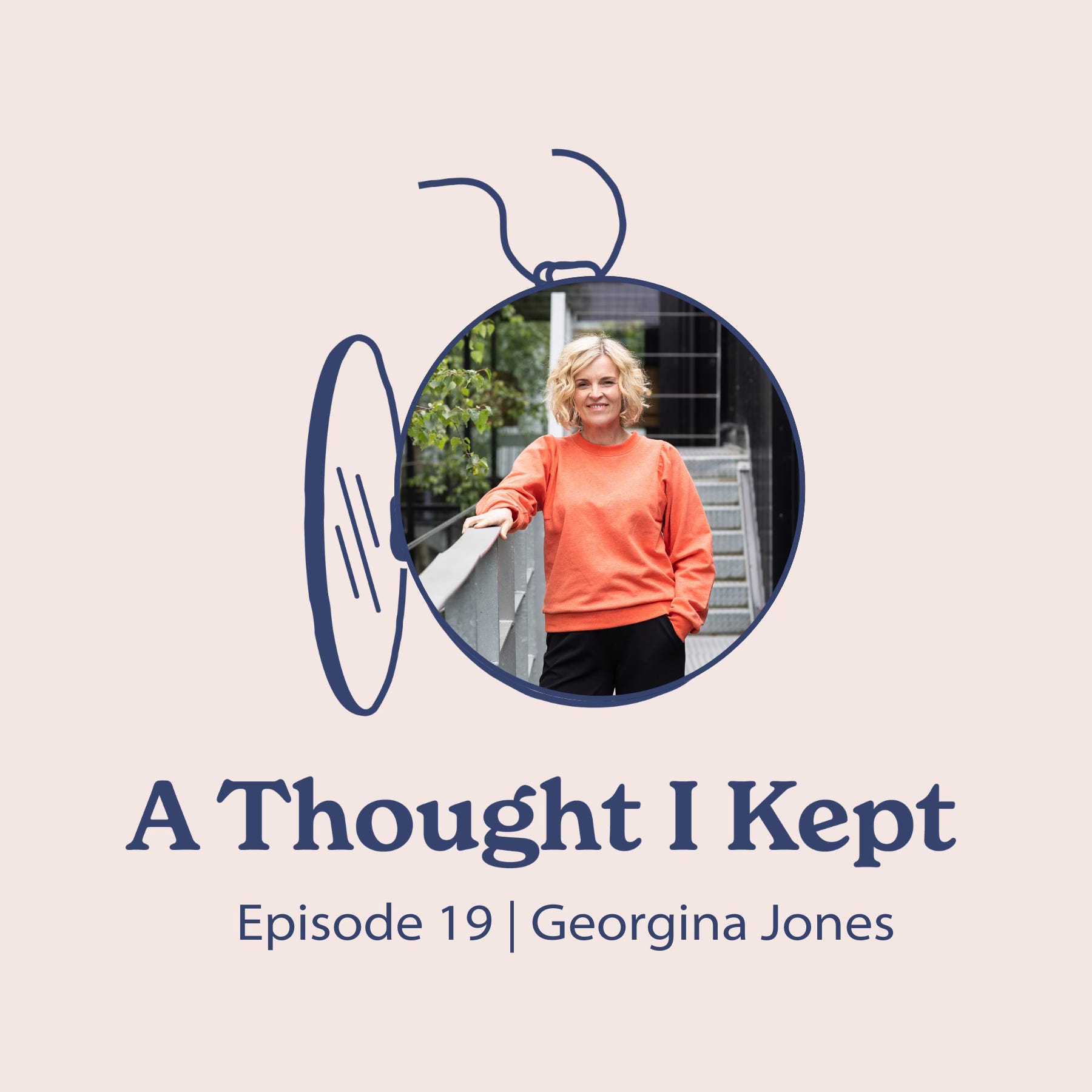
Grief, Joy and the Energy That Turns the Lights On with Georgina Jones
Georgina: I think a lot of my work now is in grief as well, in the grief space. I run something called Grief Discos.
Magical things happen in these Grief Discos. People cry, they dance, and they don’t talk about grief. But if they want to talk about grief, they can.
They cry and they dance, and that grief is in the body, so it gets processed. They are processing by dancing to house music. I think we assume everything needs to be talked through—but I don’t think we do need to talk through everything.
We can feel better by going to a sauna, and something might shift. The head isn’t the only part of us that can solve problems.
Claire: When I first saw you, you brought so much joy to the room. I remember later learning about the Grief Discos, and I hadn’t put it together that you were the same person who ran them.
I had this moment of surprise—wait, you can hold both so much joy and grief? I think that says something about the stories we tell ourselves about emotions. That we can only inhabit or be identified with one emotion at a time. So how could this person possibly hold both joy and grief?
Did you always understand that joy and grief could be held at the same time—or did that understanding come to you through your experience of running Grief Discos?
Yes, I think before losing my son—he died in March 2023—I’d experienced loss, but no one as close as my child. My beautiful parents are still alive, so I hadn’t experienced that level of grief before.
I had a very similar view to grief as most people do—we don’t really talk about it, we don’t know what to say, all of those things.
But because of who I am, and because I’ve always solved problems with energy, joy and music—they’ve been my solutions—it felt natural for me to approach grief that way too.
Even my partner, although Northern and very different to me—we laugh a lot. Even in the thick of grief, in those first couple of weeks, we decided to watch Ted Lasso. We’d cry and be in the hardest moments, and then say, “Should we put Ted Lasso on?”
We’d watch, we’d laugh, we’d cry again. I’ve always found there’s space for joy. I’ve been to some really good funerals—they were fun.
There’s a reluctance people have to feel sad, to stay in sadness. But I’m now learning more about what joy does to the brain, and what I intuitively knew is backed by science. We need to lean into joy.
It moves us away from stress and anxiety. Those circuits can’t work at the same time. So even tiny moments of joy give us a rest.
Grief isn’t something to be fixed. It’s something to be felt. And that’s what the Grief Disco does—it encourages people to feel it.
And that’s the key—the feeling of it.
There are so many narratives we hold around emotions, especially grief. For many, it’s frightening—to see it in others or to feel it ourselves.
When I lost my mum, and two of her sisters within a year, what I noticed was the isolation. Part of it was mine—I felt I had to retreat. I didn’t have the words. And part of it was others retreating too—they didn’t have the words either.
There’s this belief that grief should look a certain way, and that belief can really hinder us.
What excited me about discovering the Grief Disco was the idea that grief could be something else. That it could have connection in it.
So often grief disconnects us—especially from the people we need the most in those moments. But what I saw with Grief Disco was that you were offering connection again.
How do people receive that invitation—to be in the space, in music, in their bodies—and to connect, when grief often does the opposite?
One of our values is that no one should grieve alone. Another is that joy and grief can coexist. It’s the most human thing—everyone will experience grief. Everyone we love will die. We will die.
It sounds harsh, but it’s what connects us.
At a Grief Disco, people are in a room with others who get it. That’s the biggest thing. They don’t have to talk—but they can.
We have a ritual space, with a tree hung with luggage tags—dedications for the people they’re dancing for. We give people permission slips for joy—because often they’ve stopped themselves. They’ve put guilt on it.
You don’t get over grief. You move with it. It becomes part of you. So we say, “All is welcome.”
And what happens is—people are dancing to house music, and they’re crying. And it’s wonderful.
We do them online too. People can turn their cameras off and dance in their living rooms. Then we come back together for a chat.
Everything is invitation. If you want to talk, you can. If you don’t, that’s okay too. It’s such a beautiful experience. The energy is like nothing else. It’s joyful and sad at the same time.
And they can coexist.
Sometimes songs let us go to places that nothing else can. Do you have a song that always seems to bring emotional release in people?
That’s a great question. I have so many!
When we did choirs, the first one was for Admiral Insurance. We had it as a pilot, and I collected all their stats—attendance, performance, everything. I wanted to prove singing could impact business results.
And I thought—Queen. Queen can do that. So Somebody to Love was the first piece we taught.
It was incredible. Don’t Stop Me Now—I’ve taught that maybe a thousand times.
There’s something about Queen. Freddie Mercury’s energy. Imagine seeing him live! That energy lives on.
We haven’t played Queen at Grief Discos—but we could.
For an over-55s Grief Disco we did with Age UK, we moved away from house music—did more Motown and soul.
I used to be in a 12-piece soul band—a bit like The Commitments. I was a soulette—tambourine, harmonies, the lot.
So anything Motown, Wilson Pickett, Stevie Wonder, Otis Redding—those songs get people moving. High BPMs, lots of positive energy.
Now that we’re moving into winter—with the darker days and heavier collective energy—what’s something we can do to connect with more energy, in a way that doesn’t feel overwhelming or anxiety-inducing?
The highest frequency of energy we can tap into is love. Love is always the answer.
There’s so much lack of love in the world. We can’t fix everything, but we can impact what’s around us.
So for our own energy—and to make a difference—we start with love.
Some practices I love:
1. Tiny Little Joys – from MaryCatherine McDonald (@mcphd), who wrote The Joy Reset. She’s amazing. Every day, look for joy. A friend said to me after my son died: “Look for the love every day.” If you look for it, you’ll find it.
2. Write to Love – Elizabeth Gilbert (@elizabethgilbert) does this. Write a letter every day to unconditional love, and write what it would say back to you.
3. Change Your Frequency Playlist – Have a playlist that raises your vibration. Bit of Queen, maybe.
4. State Management – I keep a gratitude list, but more than that—it’s a list I read to change my emotional state. A toolkit to remind myself I’m in control of my own energy.
And all of that is rooted in love and joy.

Let me know if this conversation/ episode helped you. If you’re navigating your own grief right now, sending you so much love, and even maybe a little bit more joy, right now.
x Claire
Some extras…
Here’s your video link to this week’s episode. From January, you’ll find these on Youtube! Follow here. As it’s the start of the New Year, you’ll get some ideas that stayed that helped people navigate wellbeing and self-care.
Subscribers to The Wellery will get your Holiday Anti-Overwhelm Guide in your inboxes in the next week - join today for a December that doesn’t burn you out or leave you exhausted.
Before you go… if you need more support with grief and any of the other emotions that might feel unwelcome (but are there anyway) this Holiday Season, these posts might help:
The Sunday Read | Everyone needs a Wendy

“There are no words until there are the right words.” — Kate Bowler
How are you holding your emotional breath right now?

You're probably feeling the pressure right now to get your emotional life all wrapped up for Christmas: to be happy, joyful, merry, and bright. But what if you’re also aware of some feelings of say frustration, insecurity or anxiety? What do you do with them right now? Pack them away until the New Year?
And if you need to talk about grief, or any of the other emotions that might come up this Holiday Season — from anxiety to overwhelm, frustration to envy — let’s talk. In my emotions coaching sessions, all feelings are welcome and together we can explore how you both feel this Holiday Season and how you’d like to feel.


